
It’s an uncomfortable question, but one every business owner should be able to answer without hesitation: if your web designer vanished tomorrow (retired, got hit by a bus, ghosted you, or simply closed up shop), could you still log in, make an update, or move your website somewhere else?
If you paused for even a second to think about it, that’s a problem.
Across Southeast Alaska, we see this scenario play out more often than you’d expect. A business owner built a great relationship with a freelance designer or a small agency, everything worked fine for years, and then one day that person is unreachable. Maybe they moved out of state. Maybe they retired. Maybe the agency shut its doors. And suddenly, a business owner who thought they had a website discovers they don’t actually own it. They just had access to someone else’s project.
This isn’t a hypothetical horror story. It’s one of the most common (and most avoidable) risks small businesses in Ketchikan, Juneau, and across the region are quietly sitting on right now.
"Having a Website" and "Owning a Website" Are Not the Same Thing
Here’s the uncomfortable truth: plenty of businesses that believe they have a website don’t actually control any of the pieces that make it theirs.
A website isn’t one single thing. It’s a collection of separate assets, and each one can technically be owned by a different party:
- The domain name (yourbusiness.com): registered somewhere, under someone’s account
- The hosting: the server space where your website’s files actually live
- The website files and code: the design, content, and functionality itself
- The CMS login: the admin dashboard used to make updates (WordPress, Squarespace, etc.)
- Email services, if your business email runs through the same provider as your website
When a freelancer or agency builds your site, it’s common (sometimes out of convenience, sometimes intentionally) for them to register the domain under their own account, host it on their own server, and keep the only admin login for themselves. Everything looks fine on the surface. Your site works, your email works, your customers can find you. But behind the scenes, you don’t actually hold the keys to any of it. You’re a guest in someone else’s house, and you didn’t know it.
How This Quietly Becomes a Crisis

Most business owners don’t discover this gap during a calm, uneventful week. They discover it during a moment of urgency, which is exactly what makes it so damaging.
Here’s how it typically unfolds:
- The designer becomes unreachable. Maybe they retired without notice, shut down their business, changed their email, or simply stopped responding.
- Something needs to change. A phone number update, a new season’s hours, a broken link, a security patch: something small that would normally take five minutes.
- There’s no way in. No login credentials on file. No idea who the hosting provider even is. No record of where the domain is registered.
- The clock starts ticking. Domains and hosting plans aren’t free. They renew annually, usually tied to a payment method that isn’t yours. If that renewal lapses because the person who owned the account isn’t paying attention anymore, your website (and possibly your business email) can simply disappear.
- Rebuilding from scratch. In the worst-case scenario, a business loses its domain entirely (sometimes to a stranger who scoops it up the moment it expires) and has to rebuild its online presence, its search rankings, and its email addresses from zero.
That’s not a minor inconvenience. For a small business that depends on its website for bookings, leads, or credibility, it can mean real, measurable revenue loss while the situation gets sorted out, if it can be sorted out at all.
Why This Happens More Than You'd Think
This isn’t usually the result of bad intentions. Most designers and agencies aren’t trying to trap clients. It happens because of a few very ordinary, very common shortcuts:
- Convenience during setup. It’s often faster for a designer to register a domain or spin up hosting under an account they already have, rather than walking a client through creating their own accounts from scratch.
- Lack of a formal handoff process. Smaller freelance arrangements in particular often skip the paperwork step where ownership and credentials are formally transferred to the client.
- Business owners not knowing what to ask for. Most people hiring a web designer are focused on how the site looks and functions, not on account structures and login hierarchies. It’s an easy thing to overlook if nobody brings it up.
- “Set it and forget it” mentality. Once a website is live and working, most business owners simply don’t think about the infrastructure behind it again, until something forces them to.
None of that makes it okay. It just makes it common, which is exactly why every business owner should proactively check their own setup rather than assuming it’s fine.
The Questions Every Business Owner Should Be Able to Answer
Take a minute right now and see how many of these you can actually answer:
- Who is the domain registered with, and do you have login access to that account yourself?
- Who owns the hosting account, and is it billed to your business, not your designer’s?
- Do you have admin-level login credentials to your own website’s backend (not just a “contributor” or limited-access login)?
- Is your business email tied to the same account as your website? If so, do you control that too?
- If you wanted to switch web designers tomorrow, could you do it without needing permission from anyone?
If you hesitated on more than one of these, it’s worth taking action. Not because something is guaranteed to go wrong, but because the fix is simple now and painful later.
How to Protect Yourself (Starting Today)
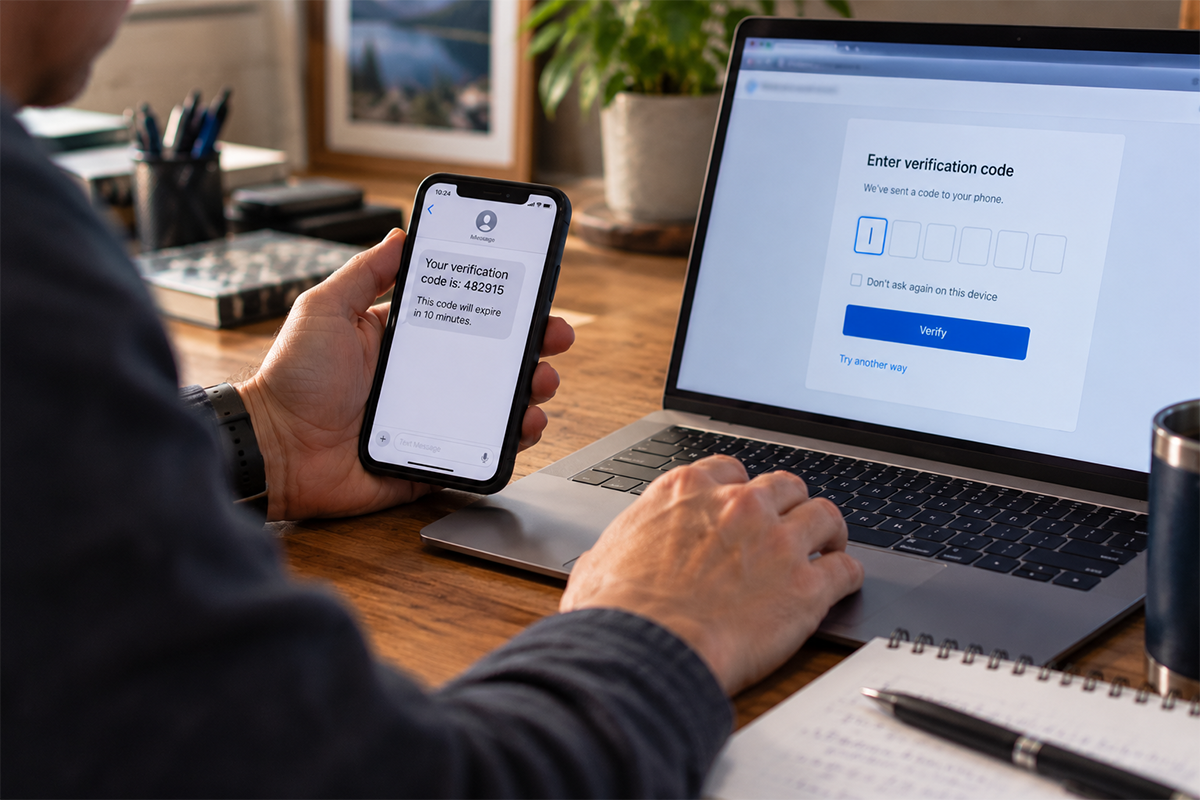
The good news is that fixing this doesn’t require rebuilding anything. It’s mostly a matter of getting ownership and access properly documented and transferred into your own hands.
- Find out where your domain is registered.
A quick WHOIS lookup can show you who your domain is registered through. From there, confirm the account is either in your business’s name or that you have full access to it. - Request admin-level access to your website and hosting.
You should have your own login, not a shared one, and not a “just ask them when you need something” arrangement. A trustworthy designer or agency will have no issue providing this. - Keep your own record of credentials.
Store domain, hosting, CMS, and email login information somewhere secure that your business controls, not solely in a designer’s inbox or password manager. - Separate your business email from your designer’s infrastructure, if possible, so a hosting or domain issue can never take down your ability to communicate with customers.
- Ask direct questions before hiring anyone new.
Before signing on with a designer or agency, ask explicitly: “Will I own the domain, hosting, and website outright, under my own accounts?” A reputable partner will say yes without hesitation.
What a Trustworthy Web Partner Looks Like
This is really the heart of the issue: your relationship with a web designer or agency should never put your business at risk if that relationship ends. A good partner builds your website for you, not around you.
At Bold Marketing & Design, we believe business owners should always hold the keys to their own digital presence. That means transparent access, clear documentation, and no hidden dependencies that leave a Ketchikan or Southeast Alaska business stranded if a working relationship changes. Whether we build your site or you come to us to untangle an existing setup, our goal is the same: you should never have to wonder whether your website is actually yours.
Don't Wait for an Emergency to Find Out
If you’re not 100% sure who owns your domain, where your site is hosted, or whether you have full access to your own website, don’t wait for a crisis to find out. A short audit now can save your business from a scramble (or a total loss) later.
Schedule a meeting with Bold Marketing & Design today, and let’s make sure your website’s keys are exactly where they belong: in your hands.